Understanding A1C
Length 0:53See how glucose, insulin, red blood cells, and hemoglobin connect to the A1C blood test.
Captions available in the player.
Learn how glucose, insulin and A1C relate to diabetes.
Diabetes is a long-term condition in which there is too much glucose (sugar) in the blood. It happens when the body does not make enough insulin, or cannot use the insulin it makes as well as it should.
Over years, high blood glucose can damage blood vessels and nerves, which is why people with diabetes are monitored regularly.
In type 1 diabetes the body makes little or no insulin. In type 2, the most common form, the body still makes insulin but does not respond to it well, and over time may not make enough. The synthetic patients in this application were selected by recorded diabetes diagnosis codes.
Diabetes changes step 3, so more glucose stays in the blood. An A1C test measures step 4.
Glucose is the body's main fuel. Much of it comes from food: carbohydrates, such as bread, rice and fruit, are broken down during digestion into glucose, which passes into the blood.
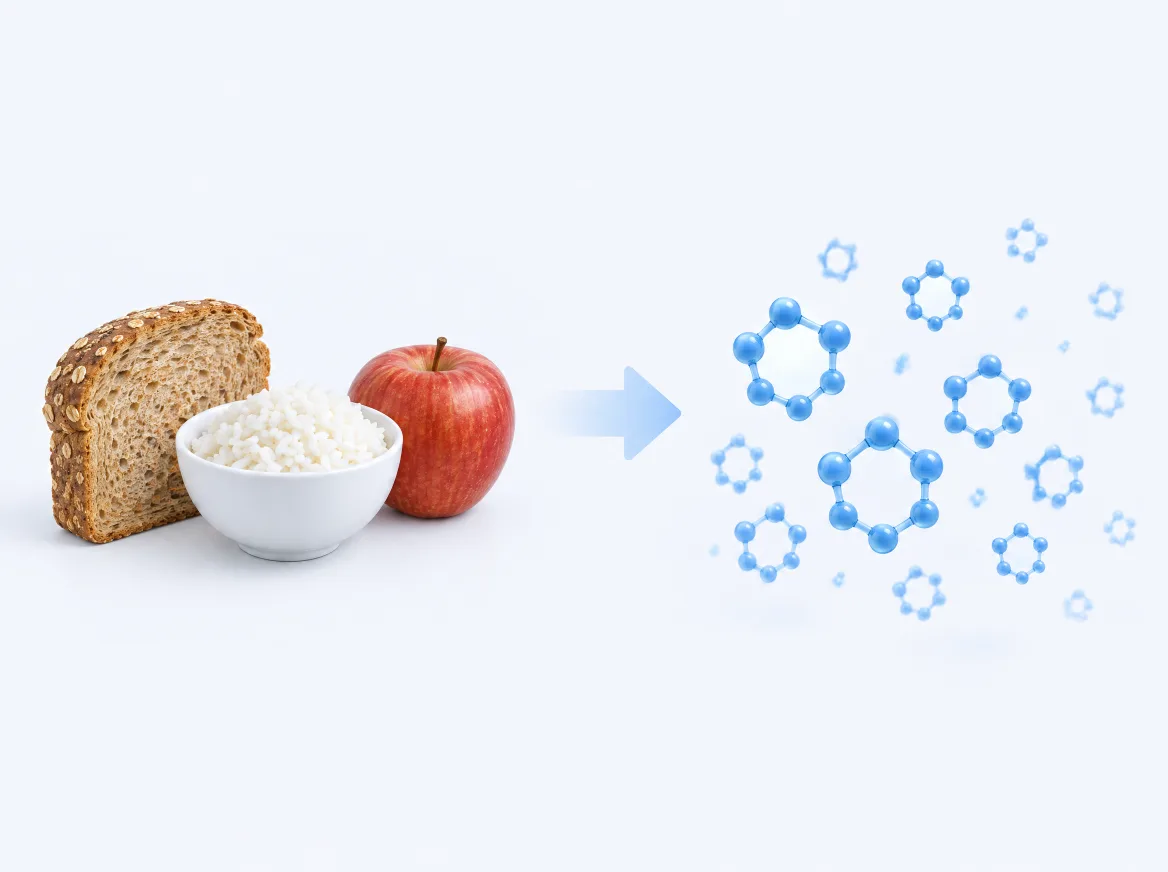
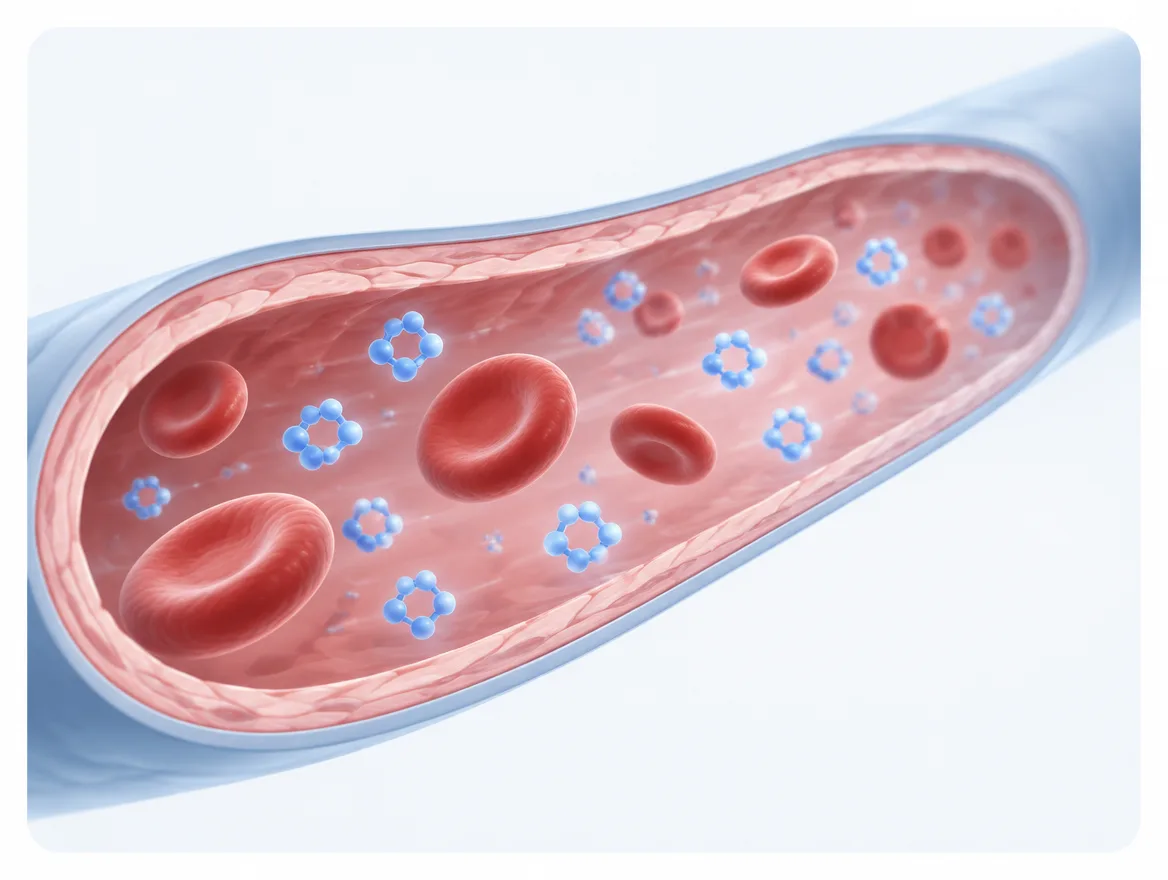
The blood carries glucose to the cells that need it. The amount in the blood rises after a meal and falls between meals.
In people without diabetes, the body keeps it within a fairly narrow range. In diabetes, it stays high for longer.
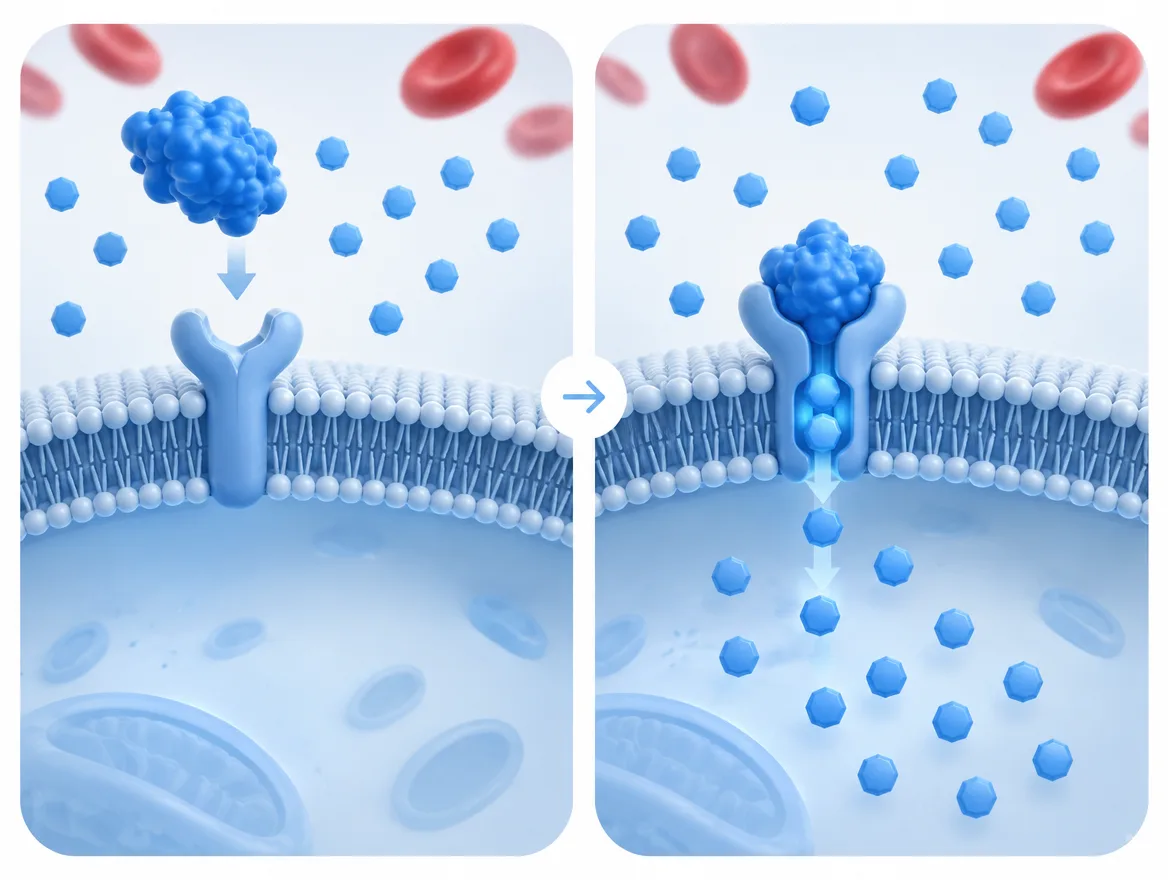
Insulin is a hormone made by the pancreas. It works like a key: it binds to cells and lets glucose move out of the blood and into them, where it is used for energy or stored.
Why can glucose stay in the bloodstream?
If there is not enough insulin, or the cells do not respond to it well, glucose cannot get into the cells easily. It stays in the blood instead, and blood glucose remains high.
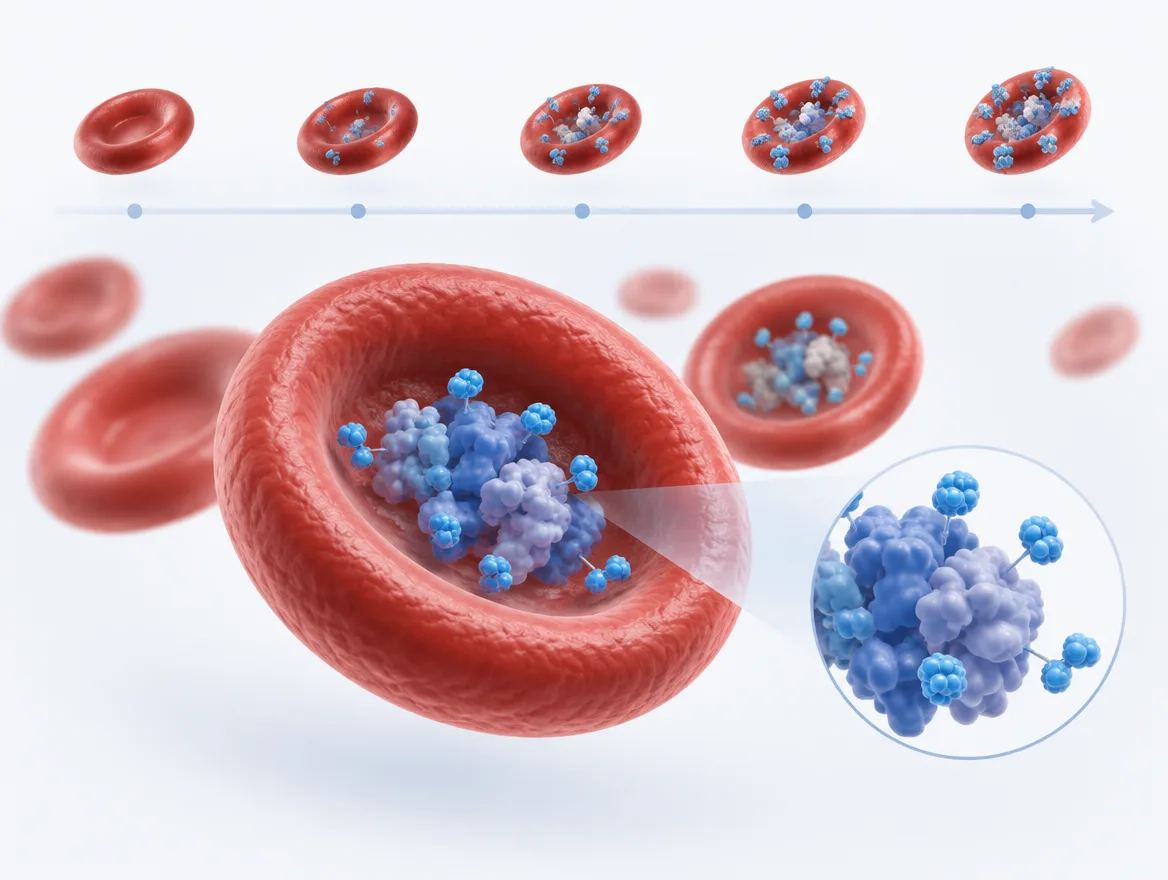
While glucose is in the blood, some of it sticks to haemoglobin, the protein in red blood cells that carries oxygen, and stays stuck for the life of the cell. The more glucose there has been in the blood, the more haemoglobin carries it.
(also called HbA1c, or glycated haemoglobin) is the blood test that measures this: the share of haemoglobin with glucose attached, given as a percentage.
A red blood cell lives for roughly 120 days. Because the blood holds cells of every age, an A1C reflects average glucose exposure over roughly the past two to three months, weighted towards the most recent weeks.
A single blood glucose reading is a snapshot: it changes with the last meal, exercise and time of day. A1C smooths those changes out into one number that describes the past few months, which is why it is the test used to monitor diabetes over time and the one this application tracks.
It also has limits. It does not show daily highs and lows, and some conditions that affect red blood cells, such as certain anaemias or haemoglobin variants, can make the result less reliable.
A goal around 7% is a common reference for many adults with diabetes, and the patient workspace draws a line there for context. But goals differ from person to person, and A1C is one piece of information among many. Diagnosis, goals and treatment are decisions for a clinician who knows the patient. Nothing in this application recommends any of them.
All four steps, from a meal to the A1C test, in under a minute.
See how glucose, insulin, red blood cells, and hemoglobin connect to the A1C blood test.
Captions available in the player.